
For more than 60 years, the Sheridan-Kalorama Neighborhood Council has served as the neighborhood association for Sheridan-Kalorama. In coordination with the many other excellent organizations in Sheridan-Kalorama, we work to preserve and enhance Sheridan-Kalorama as one of the most desirable historic residential communities in the country. To that end, we regularly oppose any expansion of non-residential uses in our neighborhood, such as chanceries and office buildings.
HISTORIC DISTRICT
WASHINGTON D.C.
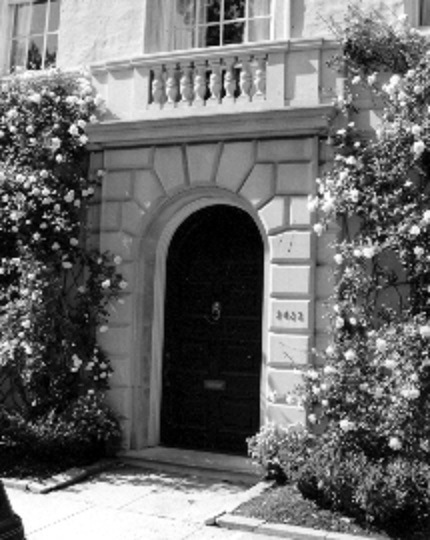
2433 Tracy Place, NW
Known in the 19th century for its idyllic landscape, Sheridan-Kalorama underwent rapid development in the early 20th century as the city of Washington’s growing population moved away from the old city center in its quest for the suburban ideal. Today, Sheridan-Kalorama is comprised of a network of cohesive town-and suburb-like streetscapes. The streets are lined with a variety of housing forms, each of which contributes to a sophisticated and distinguished residential image that is unique within Washington, D.C.
The vicissitudes of time have wrought many changes on this old home [Kalorama], and now we hear it is for sale. I suppose some fine morning we shall look for Kalorama and find it not. Civilization makes rapid strides. In place of undulating hills and dales, graceful forest shade and winding drives, we shall find the woodman’s axe has felled the trees, the pick and shovel have levelled the hills, the shaded driveway that calls to memory the names of heroes and men famous in our country’s history who have passed near those historic trees, will have to give way to broad avenues and architectural monstrosities which are an abomination to the sight and the sense; and this is… civilization.
Mary Lockwood, Historic Homes in Washington, Its Noted Men and Women (1889).
The Sheridan-Kalorama neighborhood is located in the northwest quadrant of Washington, D.C., just north of the original city boundaries laid out by Pierre L’Enfant in the late 18th century. Originally part of a large estate, today it is a quiet, elegant, and urbane residential enclave nestled in the midst of the city. Bounded by Connecticut Avenue on the east, Rock Creek Park on the north and west, and Florida Avenue on the south, this affluent neighborhood is distinguished by its well-designed houses and apartment buildings. The area also features numerous embassies, chanceries, churches and private schools.
LANDSCAPE FEATURES
The higher elevation of the area occupied by Sheridan-Kalorama historically isolated it from the Federal City. Early topographical maps reveal that the land included hills, gentle knolls and the precipitous ravine of Rock Creek. After the sale of the original Kalorama estate in the late 19th century, there was substantial regrading of the land. Parts of the neighborhood were terraced to provide flat areas appropriate for more intense residential development, as well as to provide transitions between severe changes in grade. Despite these alterations, Sheridan-Kalorama still retains much of its unique character defined by the natural topography. The neighborhood is hilly, with tree-lined streets that are often short or contoured to meet the lay of the land. At its height, the area still affords an excellent view of the city. Both the historic and contemporary topography are atypical of the city and contribute to the identification of the Sheridan-Kalorama neighborhood as a distinctive place.
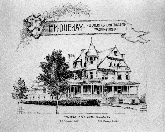
Illustration 22 and 23 Drawing and Photograph, 2129 Wyoming Ave. from Work of T. F. Schneider Architect, Washington, D.C., 1894.
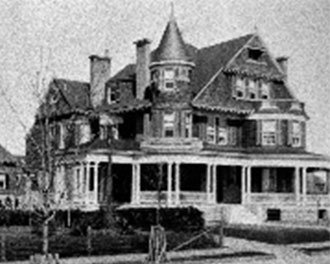
Washington Historical Society
William Henderson Moses, a local furniture and carpet magnate, commissioned prominent Washington architect T. F. Schneider in 1892 to design a house for the large lot he owned on the plateau of the newly developing Kalorama Heights subdivision. The house, though altered, remains the oldest free-standing residence built in Sheridan-Kalorama.
“Because of the steep hillside, it was impractical to build a street without destroying adjacent building sites on S Street or Decatur Place. A ramp would have been difficult for both carriages and automobiles and uncomfortable for pedestrians. Instead, the streets were gently graded above and below and were connected with two balancing flights of stair separated by a fountain.”
Washington, D.C.Walking Tours, Tony Wrenn, 1975
The steps and their lion-headed fountain were designed and constructed by the Municipal Office of Public Works and Grounds in 1911.
HISTORY
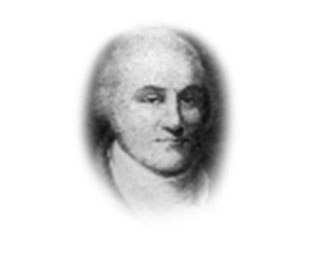
“Joel Barlow” by Robert Fulton.
Historical Society of Washington D.C.

SHERIDAN – KALORAMA HISTORIC DISTRICT
The Kalorama area remained rural until the last years of the 19th century. Two hundred years earlier, the area was part of a 600-acre land grant from Charles II of England to a former indentured servant, John Langworth. In the 18th century, the property was included in Anthony Holmead’s ‘Widows Mite’ holdings. Later it was owned by Gustavus Scott, a commissioner for the District of Columbia. In 1795, Scott constructed Belair, a large classically styled house in the area known today as 23rd and S Streets. Poet and diplomat Joel Barlow bought the estate in 1807 and renamed it ‘Kalorama’ after the Greek word for ‘fine view.’ During Barlow’s ownership his house became a social and political center.
Thomas Jefferson was a frequent visitor to the estate, and Robert Fulton, the wellknown inventor and accomplished painter, was a long-term guest. Fulton demonstrated his torpedoes and steamship designs to members of Congress on the estate millpond that had been created by damming Rock Creek. The land changed hands throughout the 19th century, but continued to be known as Kalorama. Although the Kalorama manor house was demolished after the Civil War, its site remains a focal point of the community and today is known as Mitchell Park.
As the Kalorama property was subdivided in the late 19th century, several notable suburban residences were constructed. In 1865, former Ohio governor William Bebb built a famous octagonal house at what is now 1830 Phelps Place. Victorian styled suburban villas were constructed along Wyoming Avenue, California Street and Kalorama Road. The only one that remains is the house at 2129 Wyoming Avenue, constructed in 1892. The large, shingled Queen Anne style house, designed by prominent architect T.F. Schneider, was extensively remodeled in the 1920s in an effort to make it more in keeping with the classical tastes of the period.
Because of its isolation, the Kalorama estate was confiscated by an Illinois regiment and used as a smallpox hospital during the Civil War. Maps from 1862 note the house as the “Kalorama Hospital” This photograph from 1865 is one of the earliest taken of the property
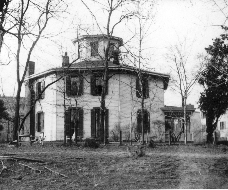
“It was all country around here in 1900, Leroy Street wasn’t paved, and at the top of the hill was the Old Phelp’s Place, a big old frame octagon house that presided over the street, it made our street a dead end, which was very, very nice.”
Mary Park Clements, 2113 Bancroft Place, N.W.
In the early 20th century, automobiles were both a novelty and an expensive hobby. The wealthy, such as those who lived in Sheridan-Kalorama, often maintained a separate garage to house and a chauffeur to repair and operate their vehicles.
While widespread urban rowhouse construction was taking place by the 1880s in the adjacent Dupont Circle neighborhood, Kalorama remained essentially rural in character. In 1886, the District announced plans to extend Massachusetts Avenue across Rock Creek. Other improvements quickly followed, including the extension of Connecticut Avenue and the installation of streetcar lines. Land was quickly platted and systems of streets and terraces planned which included a circle at the north end of 24th Street (Kalorama Circle). By 1887, the price of land had tripled, and the entire area had been subdivided into smaller or urban lots suitable for rowhouse construction.
Actual development was slower in coming. Early construction activity took place closest to Connecticut Avenue, which had a streetcar line by 1897. Speculatively built rowhouses and detached houses were constructed along S Street, Bancroft Place, Leroy Place, and Wyoming Avenue in the 1890s. Large, luxury apartment buildings were constructed in the first decade of the 20th century, concentrated along Connecticut Avenue and California Street. By the 1910s, the neighborhood was firmly established as an exclusive residential neighborhood. As development continued west of 23rd Street and north of Wyoming Avenue in the 1910s and 20s, it took on a more suburban character. Individually designed detached houses were constructed by and for an affluent clientele who had the means to maintain a car rather than having to rely on the streetcar.
2400 Block of Kalorama Road
RESIDENTIAL ARCHITECTURE
Sheridan-Kalorama has a distinctly residential ambience, one associated with the visual imagery of an early 20th century suburb. This appearance results from the closely and carefully sited, architecturally significant structures that characterize its streetscapes. These streetscapes present a unique grouping of residential building types that juxtapose urban and suburban forms and formal and informal house 2400 Block of Kalorama Road designs executed in a range of architectural styles. Typical of affluent neighborhoods from the turn of the century, the architecture found in Sheridan-Kalorama is marked by its commitment to dignity and propriety, often evoking 18th and early 19th century colonial and federal-era building styles. Prominent local and nationally recognized architects have contributed to the neighborhood’s high quality residential architecture. From modest rowhouses to distinguished townhouses and grand mansions, Sheridan-Kalorama’s buildings illustrate the aesthetic evolution that took place in American architecture as 19th century design ideas shifted to those of the 20th century.
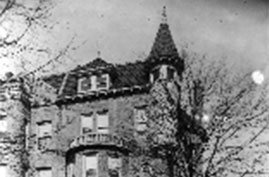
2111 Bancroft Place
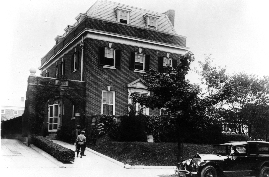
2314 Wyoming Avenue
When the area was first opened up to widespread development in the 1890s, developers in Sheridan-Kalorama began to erect rows of houses on speculation. Rowhouse construction was concentrated in the southeastern corner of the neighborhood closest to Connecticut Avenue and the established Dupont Circle area. This earliest phase of development illustrates the contemporary perception of the neighborhood as an extension of the densely developed city to the south. The rows at 2107-2115 S Street and 2111-2121 Bancroft Place (1895) are illustrative of this period. The rough-hewn stonework, round-arched openings, picturesque towers and corner turrets were constructed in the Romanesque style popular at the time, and which was in use throughout the Dupont Circle neighborhood to the south. Unlike other parts of the city, the rowhouse declined in popularity in Sheridan-Kalorama as the neighborhood became increasingly established.
In reaction to the dark, medieval-inspired designs of the Victorian period, architectural tastes changed in late 19th century in favor of more classical styles, particularly those which were influenced by American colonial and federal era architecture. The affluent reacted to the era’s increasing urbanization and influx of immigrants by embracing the Colonial, Georgian, and Federal Revivals because of their symbolic association with what was perceived as an established, patrician American past. By 1900, symmetrical, ordered façade compositions, red brick with stone trim, classical detailing, and Palladian and multipained windows replaced the asymmetrical, turreted, rough-stoned aesthetic of the Romanesque. At the same time, French BeauxArts classicism and eclectic romantic styles, such as the Mediterranean Revival, also became popular.
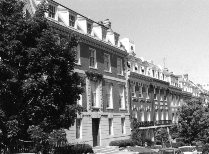
2100 Block of Bancroft Place
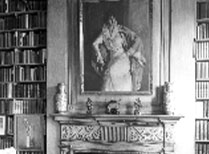
Delano House, 2244 S Street

The Highland, circa 1910
With the arrival of the 20th century, the larger, more elaborate townhouse emerged as the successor to the 19th century rowhouse form. Like rowhouses, townhouses in Sheridan-Kalorama present a collective design so cohesive that one might think they were designed by a single hand and built as a single unit. However, these buildings were not speculatively built in rows, but rather as privately commissioned, individual works. A formal and elegant character-defining element of the neighborhood’s townhouses is the European piano nobile or noble floor which places the main public floor on the second level. Made popular in Renaissance Italy, the piano nobile is associated with European city life where private living spaces were separated from public street-level commercial and service spaces. These townhouses can be found throughout the eastern portion of the district and along Massachusetts Avenue, with particularly fine examples at 2238 Q Street (1901), 2132 Bancroft Place (1907) and 2129 S Street (1909). Full-scale mansions, often palatial in scale and character, also emerged in the early 20th century, particularly along Massachusetts Avenue. Noteworthy examples can be found at 2301 Massachusetts Avenue (1907), 2349 Massachusetts (1906), and 2300 Wyoming Avenue (1912).
APARTMENT LIVING
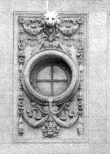
The beginning of the 20th century saw the introduction of apartment buildings to the neighborhood. Their construction brought large numbers of well-to-do residents to the neighborhood, increasing the area’s popularity and visibility. Between 1902 and 1940, 30 apartment buildings were constructed in Sheridan-Kalorama, many of which were among the city’s largest and most expensive. At the turn of the century, apartments were designed and operated for the wealthy, with services and amenities similar to grand hotels. Luxury buildings, such as the Highland, constructed in 1902 on Connecticut Avenue, included public ballrooms and dining rooms, and a garage for tenants’ automobiles. Some buildings, such as the Wendell Mansions, constructed at 2339 Massachusetts Avenue in 1906, were designed to appear as a single-family mansion, with only one apartment per floor. Luxury buildings continued to be constructed into the 1920s, such as the elegant building at 2500 Massachusetts Avenue. This small limestoneclad building, built in 1922, features only eight units, each with three bedrooms, a maid’s room, a conservatory and a sun-room overlooking the building’s rear garden and Rock Creek Park.
In the afternoons wives made social calls. Each household served tea on a specified day and the neighborhood ladies could spend their afternoons visiting several residences. During the evening, quiet private parties were held. For such occasions, awnings were rented to cover the front walks to the houses and so everyone knew who was entertaining. Because the area was the residence of many people employed by the government, it was often possible to greet the President when he attended affairs in the neighborhood.
Sheridan-Kalorama Historical District Application
Sheridan Circle and Massachusetts Avenue, 1911
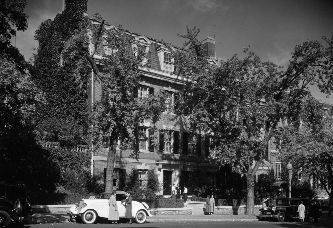
The Holton-Arms School at 2125 S Street was the first private school built specifically for educational purposes in the neighborhood.
CHURCHES AND SCHOOLS
From the turn of the century to the beginning of World War I, a number of important social institutions were established to serve the emerging neighborhood, including churches and schools. Early in the 1890s, Sheridan-Kalorama’s residents began planning for their first church, St. Margaret’s Episcopal Church, at the northwest corner of Connecticut Avenue and Bancroft Place. In 1904, the Church of the Pilgrims was founded at the opposite end of Sheridan-Kalorama at the corner of 22nd and P Streets at Florida Avenue. The Friends Meeting House at 2111 Florida Avenue was the inspiration of Mary Vaux Walcott, a close friend of the Herbert Hoovers and a fellow Quaker. She purchased the site for the construction of a meeting house of such character as to be suitable as a President’s church. The election of Hoover to the presidency in 1928 hastened the need for such a meeting house, and the building was dedicated in 1931. The first Islamic cultural center in North America was built in 1950 at the western edge of Sheridan-Kalorama, at 2551 Massachusetts Avenue.
Sheridan-Kalorama has also fostered several well-known private schools that have since moved farther northward from the city’s center. The design of The Holton-Arms School on S Street, was designed to be compatible with the residential appearance of the neighborhood. The school, attended by the children of prominent local families, became a significant social presence in the neighborhood. The Potomac School, founded in 1904 as an institution for younger children, relocated to a large private residence at 2144 California Street in 1916. By the early 1920s, the gymnasium and assembly hall had been added. The Landon School opened at 2131 Massachusetts Avenue in 1931, but had outgrown facilities and moved by 1933. The Maret School, founded in 1911 by three Swiss sisters, was located at 2118 Kalorama Road between 1923-1950s.
“It is a quiet airy walk, broken once in a while by the ‘call to Mecca’ from atop the Islamic Center nearby. Only the distant views of the Washington monument reminds the day-dreamer he is, indeed in the capital of the United States.”
Margot Phillips,Wash. Star, Sept. 27, 1964
Young children were taken on walks by their nannies to shaded, undeveloped parts of the neighborhood. Older children were given free rein and played in Rock Creek and the many open fields in the area.
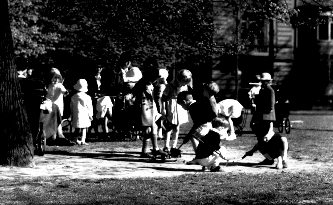
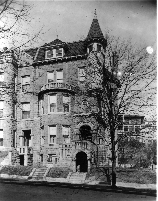
Evening Star, September 10, 1922
By 1914, the neighborhood was also home to the Washington Seminary, at 2105-07 S Street, and St. Margaret’s School, at 2115 California Street. St. Rose’s Industrial School, founded by Catholic Sisters of Charity in 1868, has housed and educated orphaned teenage girls in the neighborhood since 1908. Unlike the other schools in the area which were residential in appearance, St. Rose’s at 1878 Phelps Place (1908) is institutional in character and surrounded by a tall brick wall.
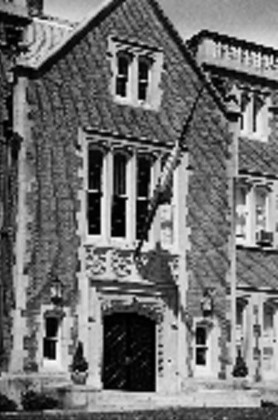
EMBASSIES
Massachusetts Avenue in the Sheridan-Kalorama area is known as Embassy Row, and many of the once-private mansions now serve as ambassadorial residences and chanceries.
The introduction of embassies into Sheridan-Kalorama dates from the 1920s, and substantially increased in the 1940s and 1950s. In 1920, the government of Siam constructed the first building specifically for embassy use. In 1928, the Government of Egypt bought the Renaissance Revival mansion on Sheridan Circle designed by Glenn Brown in 1907. Edward H. Everett’s mansion on the other side of the Circle (1606 23rd Street), designed by George Oakley Totten, Jr. in 1910, was bought by the Turkish Embassy in 1936. The same year, the French Government bought the Gothic-styled house at 2221 Kalorama Road for its ambassador’s residence. Constructed in 1910, the house was designed by Jules Henri de Sibour, one of Washington’s premier Beaux Arts architects. Another fine de Sibour-designed residence at 2200 Massachusetts Avenue was bought by Luxembourg in 1941. The presence of the diplomatic community contributed to the high degree of social and physical stability in the neighborhood, and the area generally did not suffer the post-World War II decline experienced by many other residential areas close to downtown.
“The site in this city recently purchased for the French Government…though once regarded as ‘in the country’ being a short distance beyond the street ‘which binds the city’ known as Florida Avenue in recent years is now a well-settled neighborhood and in the most fashionable quarter of the capital.”
Evening Star, May 1, 1901.
NOTED RESIDENTS
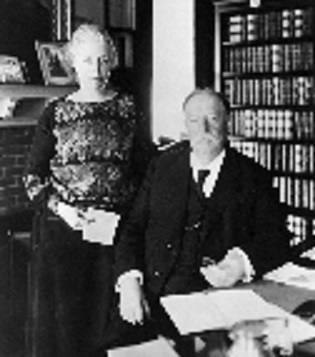
2433 Tracy Place, NW
Sheridan-Kalorama has served as home to many of Washington’s most wealthy and prominent citizens, including five U.S. Presidents, numerous Cabinet members, Senators, Congressmen, Supreme Court Justices (Charles Evans Hughes, Louis Brandeis, Harlan Stone, and Joseph McKenna), bank presidents, presidents and owners of local businesses, and military leaders. During the 1920s, residents on S Street included Edward Stellwagen, President of the Union Trust Company (2301 S); Randall Hagner, president of one of the city’s leading real estate firms (2339 S); Federal Reserve Board member Adolph C. Miller (2230 S); and Frederick Delano, Chairman of the National Capital Parks and Planning Commission and the Federal Reserve Board (2244 S).
The grounds of the Woodrow Wilson House were designed by architect Waddy Wood as part of the original scheme for the Fairbanks Residence. A formal garden was created through the use of landfill and terraces designed to overcome the steep grade.The Wilson House and its grounds are open to the public as a museum run by the National Trust for Historic Preservation.
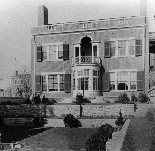
Woodrow Wilson House,1916
2215 Wyoming Avenue
Served as former President William Howard Taft’s home during his tenure as Chief Justice of the Supreme Court from 1921 until his death in 1930.
2340 S Street
Woodrow Wilson’s home following his presidency from 1921 until his death in 1924.
2314 Wyoming Avenue
The home of Warren G. Harding while he was serving as Senator from Ohio from 1917 until his inauguration in 1921.
2300 S Street
Home to Herbert Hoover beginning in 1921 when he was appointed to President Harding’s Cabinet through his inauguration in 1929 and after leaving the White House from 1933-1944.
2131 R Street
A house rented by Franklin Delano Roosevelt while he was serving in President Wilson’s Administration between 1917-1920.
The Sheridan-Kalorama Neighborhood Council was established more than 35 years ago when a small group of neighborhood residents organized to oppose the encroachment of non-residential uses in the area. While the association has since grown into a more broad-based neighborhood organization, its principal purpose remains the same — to preserve and enhance Sheridan-Kalorama as a desirable residential community. The Sheridan-Kalorama Historical Association, a non-profit preservation organization, was formed by the Neighborhood Council to study the architectural and social significance of the neighborhood. This study resulted in the comprehensive historic resources survey of the entire neighborhood. In 1989, the Sheridan-Kalorama Historic District, which includes 610 historic buildings, was listed in the D.C. Inventory of Historic Sites and on the National Register of Historic Places.
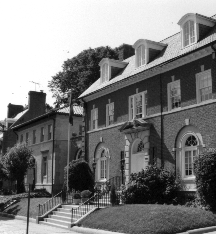
2400 Block of California Street
This brochure was developed by the D.C. Preservation League, EHT Traceries, Inc. and D.C. Office of Historic Preservation as part of a series to provide information for residents and visitors on the social, cultural and architectural history of Washington’s historic districts. This project was funded by a grant from the U.S. Department of Interior, National Park Service, through the D.C Department of Consumer and Regulatory Affairs, Historic Preservation Division.
Information in this brochure is based on the National Register nomination for the Sheridan-Kalorama Historic District. Uncredited photos by Traceries.
PRINTED 2000
D.C. OFFICE OF HISTORIC PRESERVATION
DESIGN BY D|G WASHINGTON